Custom software for Retail & E-Commerce
We build 8 types of software for retail & e-commerce — tailored to how your business actually works, not generic platforms you adapt around. Fixed quote within 48 hours — own it outright, subscribe and we host, or share revenue.
Related guides: When Retail Outgrows Square & Shopify →|Custom Retail Software: Beyond the POS →
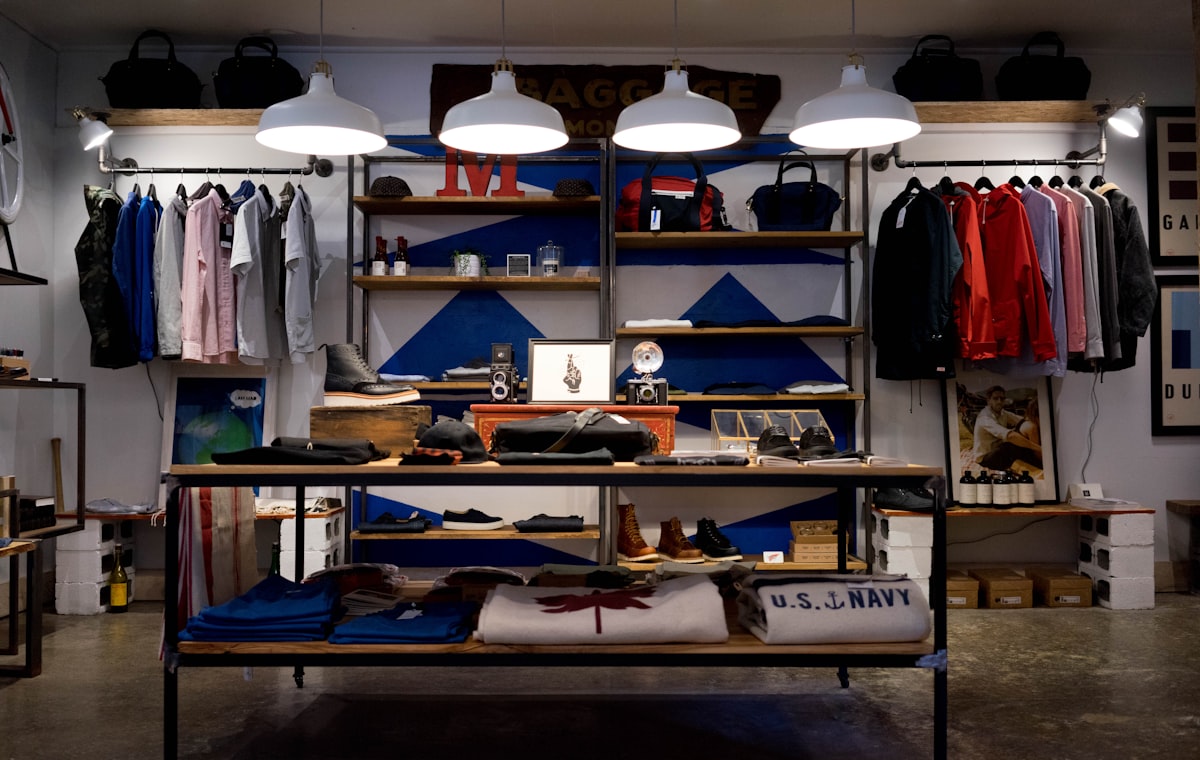
Products we build for Retail & E-Commerce
Don't see what you need? We build any custom software product — just ask.
Why Retail & E-Commerce needs custom, not off-the-shelf
Generic SaaS forces your team to adapt to someone else's idea of how retail & e-commerce works. Custom software adapts to you.
One-time build cost or transparent hosted plan. No surprise licence renewals as your team grows.
Self-host, our hosted infra, or hybrid — your call. No vendor lock-in, no data trapped in third-party silos.
Connects cleanly with the tools you already use — accounting, payments, comms, analytics — instead of forcing migrations.
Three ways to engage
Pick the model that fits your budget and timeline. Switch anytime.
Own it outright
One-time build fee. Full source code, no licensing, deploy anywhere.
Get started →Subscribe and we host
Monthly subscription, zero infrastructure headaches. We handle hosting, updates, security.
Get started →Revenue share
No upfront build cost. You cover only the development cost (credited back against your first invoices), plus a percentage of sales. Our success is tied to yours.
Get started →Custom Retail Software Development: What Buyers Actually Need
Most retailers don't start by looking for custom software. They start with Shopify, Square, Lightspeed or a marketplace plugin, and that is usually the right call. Custom retail software development becomes worth considering when the workarounds cost more than the tool: stock counts that disagree between the shop and the website, staff re-keying orders, pricing rules living in spreadsheets, or a business model the off-the-shelf tool never anticipated.
This page covers what custom retail software typically includes, where it pays off, what it costs on the market, and how to start without over-building.
Operational Problems That Push Retailers Toward Custom Software
- Inventory drift across channels. The same SKU is sold in-store, online and on a marketplace, and the numbers never match, which leads to oversells and cancelled orders.
- Manual order handling. Orders are copied between the storefront, the warehouse and the courier portal, and every handover is a chance for error.
- Messy product data. Attributes, images and prices are scattered across supplier files, so listings go live late and inconsistent.
- Pricing done by gut feel. Nobody has time to watch competitors or margins SKU by SKU.
- Unusual business models. Consignment, rentals, made-to-order, B2B and retail mixed together, or multi-vendor selling.
- Weak customer data. Loyalty, purchase history and marketing live in different tools with no single customer record.
Signs You've Outgrown Your Retail POS (Including for Consignment)
A POS that worked for one till and one shop often breaks quietly. Watch for these signals:
- You export data to spreadsheets every week just to reconcile stock or sales.
- Consignment is the clearest case: you need per-consignor inventory, split commissions, automatic markdown schedules for ageing items, payout statements and a consignor portal, and the POS only handles a flat "vendor" field.
- Returns, exchanges and store credit rules differ by channel or product type, and staff improvise.
- Adding a location or a sales channel means paying for another licence or a fragile connector.
- Staff permissions, discount approvals or till-level audit trails are too coarse for your risk.
If three or more of these are true, a purpose-built system such as a Retail POS with inventory sync, returns and staff management is likely cheaper over a few years than patching the current one.
Must-Have Modules When Creating Software for Retail
Core selling and stock
- POS with offline mode, split tender, returns, gift cards and store credit
- Real-time inventory across stores, warehouse and online, with reservations, transfers, stock takes and reorder points
- Product information management for attributes, variants, images, bundles and channel-specific pricing
Online and fulfilment
- Storefront with catalogue, search, cart, checkout and multiple payment methods
- Order management: routing rules (nearest store, ship-from-store, click-and-collect), partial shipments, tracking and customer notifications
- Returns and RMA workflow tied to refunds and restocking
Growth and margin
- Loyalty, rewards and referrals, ideally built on the unified customer record
- Pricing tools: rules, competitor monitoring and margin analysis (retail pricing software pays back fastest where you carry thousands of SKUs)
- Reporting on sell-through, margin by category, stock ageing and staff performance
Custom Ecommerce Software and Custom Software for Online Stores
Custom ecommerce software makes sense when the checkout, catalogue or fulfilment logic is your competitive edge. Examples are configurable products, quote-based B2B pricing, subscriptions with unusual billing, regional tax and delivery rules, or a multi-vendor model with seller dashboards and commissions. For custom software for online stores that mostly sell standard products, a hosted platform is normally enough, and we'll say so. Our guide to when Shopify isn't enough lists the specific tipping points.
Retail Software Customisation and Integration
Retail systems rarely stand alone. Budget for retail software customisation and integration as a first-class line item, not an afterthought. Typical integrations:
- Payments: card terminals, Stripe, Adyen, PayPal, buy-now-pay-later
- Accounting and tax: Xero, QuickBooks, SAP or local ERPs; sales tax/VAT engines; e-invoicing where mandated
- Shipping: courier APIs, label printing, 3PL and warehouse systems
- Channels: Amazon, eBay, Google Merchant Center, social commerce
- Marketing: email/SMS tools, CRM, analytics
- Hardware: barcode scanners, receipt printers, cash drawers, scales, and fiscal devices where local law requires them
- Suppliers: EDI, CSV/API product feeds, dropship connections
Many retailers get the most from an omnichannel platform that makes stock, orders and customers a single source of truth, then connect the rest around it.
Compliance and Data Concerns in Retail
- PCI DSS: avoid handling raw card data. Use tokenisation and hosted payment fields so your scope stays small.
- Privacy (GDPR, UK GDPR, CCPA and similar): consent for marketing and loyalty, data export and deletion, retention limits.
- Tax and fiscal rules: VAT/sales tax by destination, receipt requirements, and in some countries certified fiscal printers or e-invoicing.
- Consumer law: returns windows, refund timing, price display and distance-selling rules.
- Restricted goods: age checks and shipping limits for items such as alcohol, vapes or chemicals.
- Accessibility: storefronts increasingly face WCAG expectations.
- Access control: role-based permissions, audit logs and backups, since staff and till fraud is a real retail loss.
Custom Development vs SaaS for Ecommerce and Marketplaces
The custom development vs SaaS ecommerce marketplace question is about fit, not ideology. SaaS wins on speed and low entry cost. Custom wins when licence fees scale with revenue, when workflows differ from the template, or when you need to own your data and roadmap.
| Factor | SaaS platform | Custom build |
|---|---|---|
| Time to launch | Days to weeks | Months |
| Upfront cost | Low | Higher |
| Ongoing cost | Subscription plus app fees plus transaction fees, rising with growth | Hosting and maintenance, no per-seat or per-sale licence |
| Workflow fit | Adapt your process to the tool | Tool matches your process |
| Integrations | Marketplace apps, varying quality | Built to your stack |
| Data and roadmap control | Vendor's | Yours |
Many retailers land on a hybrid: keep the commodity parts on SaaS and build only the differentiating layer. Our custom software vs SaaS comparison goes deeper.
Typical Cost and Timeline Ranges
These are typical market ranges for agency-built retail software, not quotes. Scope, integrations and team location move them substantially.
| Project type | Typical market cost | Typical timeline |
|---|---|---|
| Custom POS with inventory sync (single or few stores) | $30,000 – $90,000 | 3–5 months |
| Custom online store with bespoke checkout/catalogue logic | $40,000 – $150,000+ | 3–6 months |
| Order management / fulfilment system | $40,000 – $120,000 | 3–6 months |
| Multi-vendor marketplace | $60,000 – $250,000+ | 4–9 months |
| Full omnichannel platform | $100,000 – $300,000+ | 6–12 months |
| Loyalty app (mobile) | $25,000 – $80,000 | 2–5 months |
The biggest cost drivers are the number of integrations, data migration from the legacy system, offline requirements, and how many roles and locations you support. Phasing the build, with stock and orders first and extras later, is the most reliable way to control spend.
Build Retail Software With the Right Engagement Model
If you want to build retail software without a large upfront commitment, the commercial model matters as much as the code. We offer three: Own (one-time fee, you receive the source code), Host (monthly subscription, we run it) and Revenue Share (no upfront cost, a monthly base operational cost plus a share of revenue). Revenue Share suits new marketplaces or online ventures; Own suits established retailers who want full control. Not sure? Compare the three models.
How to Get Started
- Map the pain. List the three workflows that cost the most time or money, such as stock reconciliation, order routing or consignor payouts.
- Decide what to keep. Identify tools that work and should be integrated, not replaced.
- Start with a ready-to-customise product. Our retail products give you tested core modules, so you pay to customise the differentiating parts rather than rebuild basics.
- Get a ballpark. Use the quote calculator for an instant estimate, then tell us about your stores, channels and systems for a scoped proposal.
Retail & E-Commerce software: frequently asked questions
How much does custom retail software development cost?
Typical market ranges run from roughly $30,000 for a focused POS or inventory system to $100,000-$300,000+ for a full omnichannel platform. Integrations, data migration, number of locations and offline needs drive most of the variation. A phased build lets you spread the investment.
When should a retailer choose custom software instead of Shopify or another SaaS platform?
Custom becomes worthwhile when your workflows don't fit the template, when per-sale and app fees grow faster than revenue, or when you need to own your data and integrations. If you sell standard products with standard fulfilment, SaaS is usually the faster and cheaper choice.
How long does it take to build custom retail software?
A focused POS, order management or online store typically takes 3-6 months. Marketplaces usually take 4-9 months, and multi-channel platforms 6-12 months. Starting from a ready-to-customise product can shorten these timelines.
What integrations does custom retail software usually need?
Common ones include payment providers and card terminals, accounting or ERP systems, courier and 3PL APIs, marketplaces such as Amazon and eBay, email/SMS marketing tools, and hardware like barcode scanners and receipt printers. Supplier feeds and tax or e-invoicing services are also frequent requirements.
What are the signs a consignment shop has outgrown its POS?
Typical signs are manual consignor payout spreadsheets, no automatic markdown for ageing items, difficulty splitting commissions per item, and no consignor portal for tracking sales. If staff spend hours reconciling inventory by consignor, a purpose-built system will likely pay for itself.
Ready to build for Retail & E-Commerce?
Free project scope and fixed quote within 48 hours. No credit card. Just a conversation about what you actually need.